Line of Credit vs. Credit Card: Difference, Pros and Cons & More
Loans
When you search for common forms of revolving credit, there are two types that you will come across quite often- credit cards and lines of credit. While both credit cards and a line of credit fall under the same credit type, there are some differences. Understanding the difference between a line of credit and a credit card will help you know which one is right for you during a particular financial situation.
So, please keep reading to find out what these two common types of revolving credit mean and how they work and differ from each other.
What is a Line of Credit?
A line of credit is a credit option that allows you to borrow money multiple times up to a specific limit. Since you can borrow money when you need it, you only pay interest on the funds you borrow and not the entire credit limit.
There are two main types of lines of credit (LOC), secured and unsecured. While both work more or less the same way, a secured line of credit is guaranteed by collateral, whereas an unsecured line of credit doesn't require any collateral. A personal line of credit is one of the most common types of unsecured LOC, whereas home equity lines are secured LOC.
How Does a Line of Credit Work?
The requirements to open a line of credit vary from lender to lender and the loan type. Once your loan is approved and you get your approved borrowing limit, you can decide the amount you need within that limit. You can choose to either get your funds deposited straight to your checking account or get a check. For instance, if you have been approved for a credit limit of $20,000 and use only $5,000. Your lender charges interest on $5,000, the withdrawn amount. You can use the remaining $15,000 whenever you need extra cash during emergencies.
Your line of credit lender will issue a statement every month showing the minimum monthly payment you need to pay. There's an option to repay by making just the minimum payments every month or paying your outstanding balance in full at once.
Pros and Cons of Lines of Credit
PROS
More flexible and favorable terms
You can apply for a line of credit and only use what you need. This way, you pay the interest on the amount you withdraw and not on the entire credit line.
Helpful in making larger purchases
Since the credit limit for a line of credit could be higher than that for a credit card, you can use it when you need to make a large purchase.
Significantly lower interest rates
Although interest rates on a line of credit vary depending on its type and state of origination, a line of credit typically comes with lower interest rates than credit cards.
CONS
No grace period is available
There is no grace period on a personal line of credit. That means interest will start to accrue right from the date you withdraw from your line of credit loan.
Risk of overspending
Access to high credit limits can be an advantage, but it can also encourage overspending and put you into financial trouble.
Long pay-back period
If you only make minimum payments on your line of credit loan, it can take a long time for you to pay off your principal balance and interest.
What is a Credit Card?
A credit card is issued to facilitate easy payments for making purchases or clearing your bills. The best part is that you can earn rewards on every purchase you make using a credit card and pay later. Credit cards as revolving credit allow you to borrow money to pay for goods and services. You need to repay the amount generated in your credit card bill every month on or before the due date.
How Does a Credit Card Work?
Just like a line of credit, a credit card also comes with a set credit limit. You need to swipe your credit card or enter card details for all the purchases you make within your available credit limit. Depending on your credit card provider and card type, you can earn various rewards, making credit cards even more beneficial.
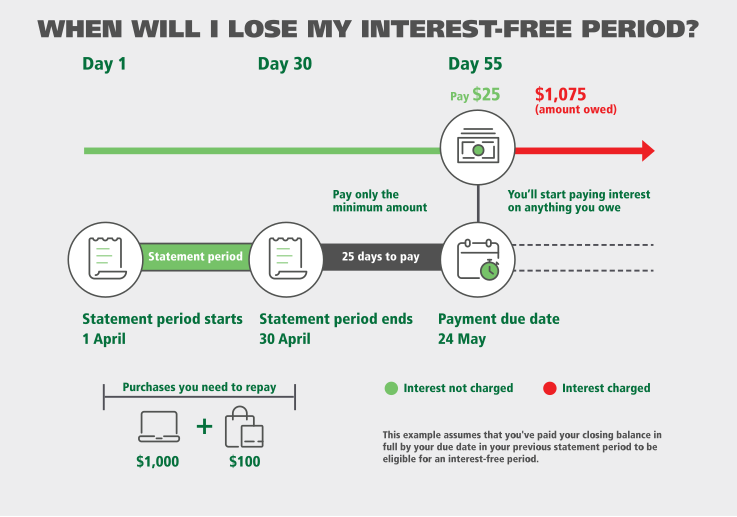
You get a grace period before your due date, giving you time to make arrangements for your payments. There are no interest charges if you choose to pay the entire balance during this period. If not, you should make at least the minimum payments generated with every billing cycle by the due date to avoid late fees and risk your credit score.
Pros and Cons of Credit Cards
PROS
Widely accepted payment option
Credit cards are one of the widely used cash-less payment modes. They are convenient to use and safe and secure for making monetary transactions.
Interest-free grace period
Credit cards usually offer a grace period on purchases during which you can avoid paying interest. However, you may not get a grace period on cash advance on your credit card.
Opportunity to earn reward points
A credit card with rewards can help you earn points or cashback on every new purchase you make. You can redeem these credit card rewards you have earned for further discounts.
CONS
Relatively high-interest rates
Although you don't need a magnificent credit score to get a credit card, borrowing money with a credit card can be expensive. Credit cards charge comparatively higher interest rates than a line of credit.
Lower credit limits
Different credit card providers offer other credit limits depending on the customer's financial profile. But if you compare credit cards with a line of credit, then credit cards offer a lower borrowing limit.
Additional fees and hidden charges
Credit cards offer great deals and discounts, but they come with some hidden charges that can increase your total cost. You can also be levied fees for missing a payment or surpassing your credit limit.
The Difference Between Line of Credit and a Credit Card
After knowing how lines of credit and credit cards work, you might have figured out the difference between the two. Understanding the key differences can help you choose the most appropriate according to your needs and convenience.
Factors | Lines of Credit | Credit Cards |
|---|---|---|
| Credit limit | Higher limit than most credit cards | Lower credit limits than lines of credit |
| When to use | For large purchases and business payments | For everyday purchases and bill payments |
| Subtypes | Can be secured or unsecured | Mostly unsecured |
| Interest rates | Lower than most credit cards | Usually higher than lines of credit |
| Rewards | Not provided | Offers different rewards based on your usage |
| Repayments | Fixed monthly repayments without grace period | Easy repayments with grace period |
Choosing What Is Right For You
The choice between a credit card and a line of credit depends mainly on your purpose for borrowing the money. If you're looking for a simple way to pay for your everyday purchases, a credit card can be your go-to option. You can save money on interest by paying your balance in full every month and getting rewards that you can use for your next bill payment or purchase.
On the other hand, a line of credit loan can be a suitable option when you want to consolidate your debt or have a hefty bill to pay off. You can schedule your monthly payments to stay within your budget.
While comparing credit cards and lines of credit, both seem like great revolving credit options. However, before choosing one, always make sure to have answers to your line of credit questions and thoroughly check the terms and conditions of different lines of credit lenders and credit card providers.
Get Your CASH 1 Line Of Credit Online
If you have irregular income or frequently have other bills to pay monthly, a credit line might be helpful. CASH 1 offers line of credit loans online in Utah, Idaho, Kansas, Missouri, and Louisiana to provide you with the missing funds. Once you're approved, you can borrow money within the credit limit any number of times. Since a line of credit is a revolving credit type, it will stay active even after you pay back the balance. It means you can use your line of credit funds whenever you need cash without going through the entire loan approval process.

Harita Solanki
Harita Solanki is a passionate advocate for personal finance and believes in empowering individuals to take control of their financial lives.
Her expertise covers a wide range of personal finance topics, including budgeting, saving, credit, debt management, and retirement planning.
With over six years of dedicated experience in the finance industry, Harita has helped countless readers of CASH 1 Loans make informed decisions and achieve their financial goals.
As a dedicated writer, Harita has contributed to numerous financial publications, sharing her knowledge and insights to help readers navigate the complexities of personal finance.
Her writing style is approachable, concise, and tailored to the needs of everyday individuals looking to improve their financial well-being.